1. Introduction
Healthcare organizations focus on promoting the health and well-being of patients by raising the standards of quality of nursing care. Missed nursing care is a global phenomenon. Studies have found its prevalence in many hospitals around the world, including Asia, Africa and North America, which lead to negative consequences such as prolonged hospitalization, decreased patient satisfaction, and increased mortality
| [1] | Lee, E., & Kalisch, B. J. (2021). Identification and comparison of missed nursing care in the United States of America and South Korea. Journal of Clinical Nursing, 30(11–12), 1592–1603. https://doi.org/10.1111/jocn.15705 |
| [2] | Kebede, C., Geta, T., Bikamo, E., Nigussie, G., Elós, E., Merkine, M., & Adamu, T. (2024). Missed nursing care and associated factors among nurses working in public hospitals of Wolaita Zone, 2023: Mixed-method study design. International Journal of Africa Nursing Sciences. Advance online publication.
https://doi.org/10.1016/j.ijans.2024.100748 |
| [3] | Khajoei, E., Balvardi, M., Eghbali, M., Yousefi, M., & Azizzadeh Forouzi, M. (2025). Missed nursing care and associated factors: A cross-sectional study. BMC Nursing, 24(1), 132. https://doi.org/10.1186/s12912-025-02984-3 |
[1-3]
.
Missed nursing care have been defined as, "Any aspect of patient care that is omitted or delayed, is receiving increasing attention"
. It is primarily caused by the imbalance between patients’ nursing care needs and the resources available, making it an ethical issue that challenges nurses’ professional and moral values
| [5] | Gustafsson, N., Leino-Kilpi, H., Prga, I., Suhonen, R., & Stolt, M. (2020). Missed care from the patient’s perspective: A scoping review. Patient Preference and Adherence, 14, 383–400. https://doi.org/10.2147/PPA.S235200 |
[5]
. There are negative factors that affect the quality of care, including lack of adequate number of nursing workforce, nurse-to-patient ratio, sudden change in the patient’s condition, patient care was often inadequate or completely missed
| [6] | Moisoglou, I., Yfantis, A. D., Galanis, P., Pispirigou, A., Chatzimargaritis, E., Theoxari, A., & Prezerakos, P. (2020). Nurses’ work environment and patients’ quality of care. International Journal of Caring Sciences, 13(1), 1–108. Retrieved from https://www.internationaljournalofcaringsciences.org/docs/13_moisoglu_original_13_1.pdf |
[6]
. One of the main factors for failure to provide comprehensive and high quality of care in hospitals is human resources shortage
| [7] | Al Muharraq, E. H., Alallah, S. M., Alkhayrat, S. A., & Jahlan, A. G. (2022). An Overview of Missed Nursing Care and Its Predictors in Saudi Arabia: A Cross-Sectional Study. Nursing research and practice, 2022, 4971890.
https://doi.org/10.1155/2022/4971890 |
[7]
.
Kebede, C and Ozmen, S. et al.
| [2] | Kebede, C., Geta, T., Bikamo, E., Nigussie, G., Elós, E., Merkine, M., & Adamu, T. (2024). Missed nursing care and associated factors among nurses working in public hospitals of Wolaita Zone, 2023: Mixed-method study design. International Journal of Africa Nursing Sciences. Advance online publication.
https://doi.org/10.1016/j.ijans.2024.100748 |
| [8] | Ozmen, S., & Arslan Yurumezoglu, H. (2025). Job satisfaction, work environment, and burnout as predictors of missed nursing care in pediatric units: A descriptive cross-sectional study. Journal of Pediatric Nursing, 81, e1–e8.
https://doi.org/10.1016/j.pedn.2024.10.019 |
[2, 8]
found that, nurses reported that availability of resources in working area, participate in teamwork, satisfaction with profession indicate low level of missed nursing care. Meanwhile, Alshammari, B. et al.
| [9] | Alshammari, B., Alshammari, M. M., & Baghdadi, N. A. (2025). The association between missed nursing care and job satisfaction among nurses in Saudi Arabian hospitals: A cross-sectional study. Nursing Reports, 15(8), 296.
https://doi.org/10.3390/nursrep15080296 |
[9]
reported a statistically significant negative correlation between missed nursing care and job satisfaction whereas low level of missed nursing care was associated with higher level of job satisfaction.
The most frequent missed nursing care are timely response to requests, offering emotional or psychological support and assisting with ambulation
| [10] | Campbell, C. M., Prapanjaroensin, A., Anusiewicz, C. V., Baernholdt, M., Jones, T., & Patrician, P. A. (2020). Variables associated with missed nursing care in Alabama: A cross-sectional analysis. Journal of nursing management, 28(8), 2174–2184. https://doi.org/10.1111/jonm.12979 |
[10]
. Turning patients every 2 hours was the most frequently missed nursing care
| [6] | Moisoglou, I., Yfantis, A. D., Galanis, P., Pispirigou, A., Chatzimargaritis, E., Theoxari, A., & Prezerakos, P. (2020). Nurses’ work environment and patients’ quality of care. International Journal of Caring Sciences, 13(1), 1–108. Retrieved from https://www.internationaljournalofcaringsciences.org/docs/13_moisoglu_original_13_1.pdf |
[6]
. The most frequently missed element of nursing care was attending interdisciplinary care conferences
| [7] | Al Muharraq, E. H., Alallah, S. M., Alkhayrat, S. A., & Jahlan, A. G. (2022). An Overview of Missed Nursing Care and Its Predictors in Saudi Arabia: A Cross-Sectional Study. Nursing research and practice, 2022, 4971890.
https://doi.org/10.1155/2022/4971890 |
[7]
.
The current study seeks to address the missed nursing care practices and contributed factors among nurses in Jeddah, Saudi Arabia. The literature shows very few studies have been conducted in Saudi Arabia, which confirms the importance of assessing the missed nursing care phenomenon in Saudi Arabia.
The role of nursing is crucial in providing high-quality nursing care, as any deficiency or negligence in nursing tasks may affect the patient's outcomes and increase the possibility of complications. Missed nursing care is considered a global phenomenon as Literature showed. This phenomenon termed missed nursing care, exist globally and impacts patient satisfaction and quality of nursing care
| [11] | Mandal, L., & Seethalakshmi, A. (2023). Experience of missed nursing care: A mixed method study. Worldviews on evidence-based nursing, 20(3), 212–219.
https://doi.org/10.1111/wvn.12653 |
[11]
.
By conducting this study, it contributes to identifying practices being missed to help nurses prioritize interventions and efficient resource allocation within health care settings and allows for targeted interventions to address contributing factors such as staff shortages, inadequate training, or inefficient workflow.
Several studies were found in nursing literature examined the frequency of missed nursing care. In this context, a quantitative cross-sectional study was conducted in the state of Alabama to discover the extent of and factors associated with missed nursing care among the nurses (n= 950) revealed that timely response to requests, offering emotional or psychological support and assisting with ambulation was the most frequently missed nursing care
| [10] | Campbell, C. M., Prapanjaroensin, A., Anusiewicz, C. V., Baernholdt, M., Jones, T., & Patrician, P. A. (2020). Variables associated with missed nursing care in Alabama: A cross-sectional analysis. Journal of nursing management, 28(8), 2174–2184. https://doi.org/10.1111/jonm.12979 |
[10]
.
However, A further quantitative cross-sectional study was conducted in Saudi Arabia to explore the dimensions of missed nursing care and its predictors among the nurses (n= 604) revealed that the most frequently missed element of nursing care was attending interdisciplinary care conferences
| [7] | Al Muharraq, E. H., Alallah, S. M., Alkhayrat, S. A., & Jahlan, A. G. (2022). An Overview of Missed Nursing Care and Its Predictors in Saudi Arabia: A Cross-Sectional Study. Nursing research and practice, 2022, 4971890.
https://doi.org/10.1155/2022/4971890 |
[7]
.
Numerous studies highlighted the reasons of missed nursing care. In this context, a cross sectional study was conducted in Iran to determine missed nursing care and its related factors (n= 189) revealed that, missed nursing care is largely associated with non-nursing tasks and a shortage of nursing staff
| [3] | Khajoei, E., Balvardi, M., Eghbali, M., Yousefi, M., & Azizzadeh Forouzi, M. (2025). Missed nursing care and associated factors: A cross-sectional study. BMC Nursing, 24(1), 132. https://doi.org/10.1186/s12912-025-02984-3 |
[3]
. This finding is consistent with findings of other quantitative cross-sectional study was conducted in both Korea and USA to identify and compare missed nursing care types and reasons between South Korea and the United States of America among the nurses (n= 1188) revealed that, labor resource was the most problem reported by the nurses
| [1] | Lee, E., & Kalisch, B. J. (2021). Identification and comparison of missed nursing care in the United States of America and South Korea. Journal of Clinical Nursing, 30(11–12), 1592–1603. https://doi.org/10.1111/jocn.15705 |
[1]
.
A further cross-sectional study was conducted in Denmark to investigate the prevalence, types and reasons for Missed Nursing Care (n= 3507) found that, staffing shortages, unexpected increases in patient census, unexpected changes in patient conditions, and increased admission and discharge activity were significantly contributed to missed nursing care
| [12] | Mainz, H., Buus, A. A. Ø., Laugesen, B., Voldbjerg, S. L., Kusk, K. H., & Grønkjær, M. (2025). Missed nursing care in Danish hospitals: A national survey. Scandinavian Journal of Caring Sciences, 39(2), e70027.
https://doi.org/10.1111/scs.70027 |
[12]
.
A few studies have shown that there is a connection between nurse to patient ratio and missed nursing care. In this context, a cross-sectional study was conducted in Greece to assess the work environment of the nurses and investigate the relation between the work environment and selected patients' safety indicators among the nurses (n= 520) revealed that, The intensive care units nurses have a high level of competency and legal regulation of the patient-to-nurse ratio, which led to reported less missed nursing care
| [6] | Moisoglou, I., Yfantis, A. D., Galanis, P., Pispirigou, A., Chatzimargaritis, E., Theoxari, A., & Prezerakos, P. (2020). Nurses’ work environment and patients’ quality of care. International Journal of Caring Sciences, 13(1), 1–108. Retrieved from https://www.internationaljournalofcaringsciences.org/docs/13_moisoglu_original_13_1.pdf |
[6]
, This findings is consistent with findings of other study showed that, The medical and surgical units was found to have a higher rate of missed nursing care compared to the intensive care units
| [13] | Hammad, M., Guirguis, W., & Mosallam, R. (2021). Missed nursing care, non-nursing tasks, staffing adequacy, and job satisfaction among nurses in a teaching hospital in Egypt. The Journal of the Egyptian Public Health Association, 96(1), 22. https://doi.org/10.1186/s42506-021-00083-0 |
[13]
.
Several studies were found in nursing literature to examine the association between work environment and missed nursing care. In this context, A quantitative cross-sectional study was conducted in South Korea to investigate the prevalence of missed nursing care and how nurse turnover affects missed nursing care (n= 264) revealed that, favorable nurse work environment was significantly associated with less missed care
| [14] | Bae, S.-H. (2025). Association between nurse turnover and missed nursing care in acute care hospitals in South Korea. Frontiers in Medicine, 11, Article 1448839.
https://doi.org/10.3389/fmed.2024.1448839 |
[14]
.
Teamwork is factor that contribute to improving the therapeutic process as a whole by reducing the missed nursing care, some physical nursing tasks cannot be performed individually according to present study findings, lack of supportive services and personnel is associated with the missing basic nursing tasks including turning and positioning every 2 hours and patient ambulation for three times per day
| [7] | Al Muharraq, E. H., Alallah, S. M., Alkhayrat, S. A., & Jahlan, A. G. (2022). An Overview of Missed Nursing Care and Its Predictors in Saudi Arabia: A Cross-Sectional Study. Nursing research and practice, 2022, 4971890.
https://doi.org/10.1155/2022/4971890 |
[7]
.
Furthermore, cross-sectional observational study conducted in Mexico to examine associations between sociodemographic characteristics, work environment factors and reports of missed care and reasons for omission of care among nurses (n= 315) revealed that, missed nursing care decreased among nurses who were satisfied with their jobs and working in suitable environments
| [15] | Zárate-Grajales, R. A., Benítez-Chavira, L. A., Serván-Mori, E., Hernández-Corral, S., Cadena-Estrada, J. C., & Nigenda, G. (2022). Sociodemographic and work environment correlates of missed nursing care at highly specialized hospitals in Mexico: A cross-sectional study. International journal of nursing studies, 126, 104140. https://doi.org/10.1016/j.ijnurstu.2021.104140 |
[15]
.
2. Methods
2.1. Design
The selected research design in this study was quantitative, descriptive, correlational cross-sectional design.
2.2. Setting
Participants in the current study included all available nurses working in Maternity and Children Specialized Hospital in Jeddah, affiliated to the Ministry of Health (MOH). The reason for choosing this hospital in particular is that the hospital has obtained accreditation from the Central Board for Accreditation of Healthcare Institutions (CBAHI, 2021)
. Additionally, it consists of 400 beds capacity. Moreover, this hospital has about 382 nurses working in the inpatient wards with national and international expertise, the nursing staff is from Saudi Arabia, India, Philippines and other countries.
2.3. Sampling
The current research's sample included registered nurses who were chosen by convenience sampling technique by selected the nurses who were available and met the inclusion criteria to participate in the study.
The inclusion criteria in the research were all female registered nurses who have experience of six months and more and provide direct care to patient in Maternity and Children Specialized Hospital.
All nurses belong to the outpatient unit were excluded due to the different nature of the working environment and condition. Also, other nursing rank or level than staff nurse such as nurses in administrative role, as well as other healthcare professions than nursing including (physicians, laboratory specialists, radiology specialists, physiotherapists, etc.) and those who participated in the pilot study.
2.4. Sample Size
From the target population the total registered nurses working in Maternity and Children Specialized Hospital (MCSH) is 382, after excluding those on annual leave, maternity leave, and sick leave, as well as the nurses with less than six months of experience in MCSH and those who participated in the pilot study, the eligible study population was reduced to 281 nurses.
Therefore, the sample size was all participants who met the study criteria. Of these, 204 completed and returned the survey, yielding a response rate of approximately 73%.
2.5. Ethical Consideration
2.5.1. Ethical Approval
The ethical approval was obtained from Chair of Nursing Research Ethical Committee at King Abdulaziz University (Approval NREC Serial No: Ref No 1M.33 on 30 August 2024), and (Ethical Approval from The Institutional Review Board of Research Ethics Committee of the Ministry of Health in Jeddah, Saudi Arabia IRB log No A02093 on 23 December 2024), furthermore, tool permission was taken from the original author via email.
2.5.2. Anonymity and Confidentiality
The study has no harm to the participants. Data collected anonymously, no personal identification data from the subjects was known, and confidentiality was maintained. Participation was voluntary. Also, subjects had the right to withdraw from participation at any time.
2.6. Data Collection Tool
Self-reported questionnaire was applied in the study. Therefore, the MISSCARE Survey was used in the present study developed by Kalish and Williams in 2009
| [17] | Kalisch, B. J., & Williams, R. A. (2009). Development and psychometric testing of a tool to measure missed nursing care (MISSCARE Survey). Journal of Nursing Administration, 39(5), 211–219.
https://doi.org/10.1097/NNA.0b013e3181a23cf5 |
[17]
. Development and psychometric testing of a tool to measure missed nursing care (MISSCARE Survey). Permission to use and adapt the survey was obtained from the original author. The questionnaire consists of two parts as follow:
Part I (Personal data and professional characteristics)
The first part includes personal data which consists of (9 items). Modified by the researcher to be appropriate for the study sample after obtaining permission from the author, which includes (Age, educational level, years of experience, working area, working shift and unit staffing, satisfaction level in the current position, satisfaction level with being a nurse and satisfaction level of the team work in the unit).
Part II (MISSCARE Survey)
The second part consists of two sections: the first section measures missed nursing care (Items Q1 - Q25). Participants asked to indicate how often the nursing care is missed for each item, using a 5-point Likert scale ranging from 1 to 5 as 1 indicates never missed and 5 indicates always missed.
The second section explore the reasons for missed nursing care (Items Q26 – Q47). Participants asked to indicate the reasons for missed nursing care, using a 4-point Likert scale ranging from 1 to 4 as 1 indicate not a reason for missed care and 4 indicate significant reason for missed care.
2.6.1. Validity
The MISSCARE Survey is valid according to research done by Kalisch & Williams (2009). The validity of the questionnaire was established by a jury group consisting of academic staff from the Faculty of Nursing, King Abdulaziz University. All suggested modifications were reviewed by the research supervisor, and the necessary changes were made. These included the removal of some items from personal data and professional characteristics part that were not applicable to the study sample, such as: gender (since all nurses working in Maternity and Children Specialized Hospital are female), job title (as the inclusion criteria were limited to staff nurses who provide direct care to patients), number of working hours (the hospital follows the policy of 48 working hours per week for all nurses whether it is 8 hours shift or 12 hours shift), and number of overtime hours (as overtime is not applicable to nurses in this hospital).
2.6.2. Reliability
MISSCARE Survey reliability was determined by the study done by Kalisch & Williams (2009) using test-retest. The result for the missed care section was (r=0.87) and the result for the reason of missed nursing care section was (r=0.86).
The present study reassessed the tool reliability in a pilot study on 30 participants due to different cultures, reliability reassessed regarding the internal consistency by calculating the Cronbach's Alpha for the tool. The result for the missed care section has a Cronbach Alpha of (α=0.97), indicating (Excellent internal consistency). The result for the reason of missed nursing care section has a Cronbach Alpha of (α=0.95), indicating (Excellent internal consistency). The overall reliability test of the study questionnaire has a Cronbach Alpha of (α=0.96), suggesting an (Excellent internal consistency) of the study questionnaire according to Daniel & Cross (2019) guidelines
| [18] | Daniel, W. W., & Cross, C. L. (2019). Biostatistics: A foundation for analysis in the health sciences (10th ed.). Wiley. |
[18]
.
2.7. Pilot Study
Pilot study was conducted on 30 participants from the study sample. By selected 10% of the main sample (n: 281). It was done to test clarity, the applicability of study tool, feasibility, and estimate the time required for complete the questionnaire. No modifications were made in the questionnaire after the pilot study. Nurses who were involved in the pilot study were omitted from the study sample.
2.8. Data Collection Process
The researcher personally visited all inpatient and intensive care units that provide direct care to the patient. A list of nurses’ names was obtained from the head nurse of each department. Based on the education department’s report, nurses who did not meet the inclusion criteria such as those with less than six months of experience in MCSH were excluded. Subsequently, the Google Form survey link was distributed via the official hospital email to all eligible nurses included in the study.
The researcher visited all included departments in Maternity and Children Specialized Hospital weekly to remind the staff nurses to fill out the online Survey and answer their inquiries to improve the response rate. No research assistants were involved in the data collection process. The data collection process took two months, started on March to May 2025.
2.9. Data Analysis
The data were analyzed using the Statistical Package for the Social Sciences (SPSS) version 26 (Armonk, NY: IBM Corp, USA). Descriptive statistics were summarized as numbers and percentages for all categorical variables, while mean and standard deviation were given for all continuous variables. The differences between missed nursing care (MNC) and the reason of missed nursing care (RMNC) scores, according to the personal data and professional characteristics, were calculated using the Mann-Whitney Z-test and the Kruskal-Wallis H-test. The normality test was performed using the Kolmogorov-Smirnov test.
Based on the plot, the MNC and RMNC scores follow the non-distribution. Thus, the non-parametric tests were applied. Furthermore, a Spearman correlation coefficient was used to determine the correlation between MNC and RMNC scores. A P-value of 0.05 was considered statistically significant.
3. Results
3.1. Personal Data and Professional Characteristics of Nurses
The current study enrolled 204 female nurses. As shown in
Table 1, (66.7%) of the participants were between 25 and 34 years old. Nurses who hold bachelor's degrees constitute (85.3%). More than half (51%) had years of experience between 6 months to less than 5 years. The most common working area was NICU (29.9%). A vast majority (85.3%) were working a 12-hour shift. Only (13.2%) of the respondents believed that there was adequate unit staffing at all times. Additionally, nurses who indicated being very satisfied with their current position, current job, and the level of teamwork in their unit were (11.8%), (29.4%), and (22.5%), respectively.
Table 1. Personal Data and professional characteristics of Nurses (n=204).
Characteristic | Category | Percent (%) |
Age group | 25–34 years | 66.7% |
Educational level | Bachelor’s degree | 85.3% |
Years of experience | 6 months–<5 years | 51.0% |
Working area | NICU | 29.9% |
Shift type | 12-hour shift | 85.3% |
Adequate staffing | 100% of the time | 13.2% |
Satisfied with current position | Very satisfied | 11.8% |
Satisfied with profession | Very satisfied | 29.4% |
Satisfied with teamwork | Very satisfied | 22.5% |
Table 1. Presents the highest frequency categories for each variable among 204 nurses.
3.2. Assessment of Missed Nursing Care and Its Elements
The assessment of missed nursing care questionnaire as shown in
Table 2, the highest-rated item in the assessment and vital signs domain was ‘Full documentation of all necessary data’ (M = 1.69), while the lowest was ‘Hand washing’ (M = 1.39). In the interventions and individual needs domain, ‘Assist with toileting needs within 5 minutes of request’ showed the highest mean score (M = 1.80), whereas ‘Assess the effectiveness of medications’ was the lowest (M = 1.62). For basic needs, ‘Ambulation three times per day’ was the most frequently missed item (M = 2.15), while ‘Skin/wound care’ was the least (M = 1.51). In the planning domain, ‘Attending interdisciplinary care conferences’ was the highest (M = 2.06), while ‘Adequate surveillance of confused patients’ was the lowest (M = 1.56). The overall mean score for missed nursing care was 1.66 (SD = 0.68).
Table 2. Highest and lowest missed nursing care items by domain(n=204).
Domain | Highest Missed Item | Lowest Missed Item | Mean ± SD |
Assessment and Vital Signs | Full documentation of all necessary data | Hand washing | 1.49 ± 0.67 |
Interventions and Individual Needs | Assist with toileting needs within 5 minutes of request | Assess the effectiveness of medications | 1.69 ± 0.76 |
Basic Needs | Ambulation/mobilization three times per day | Skin/Wound care | 1.78 ± 0.71 |
Planning | Attend interdisciplinary care conferences whenever held | Adequate surveillance of confused patients | 1.74 ± 0.78 |
Overall Mean Score | - | - | 1.66 ± 0.68 |
Table 2. Summarizes the highest and lowest missed nursing care items within each domain based on mean scores from the MISSCARE Survey.
3.3. Assessment of the Reason for Missed Nursing Care and Its Factors
Assessing the reason for missed nursing care as shown in
Table 3, the highest mean score within the communication domain was reported for ‘Unbalanced patient assignments’ (M = 2.73), while the lowest was ‘Nursing assistant did not communicate that care was not provided’ (M = 2.32). The total mean score for communication was 2.51 (SD = 0.88). For the material resources domain, the top-rated item was ‘Supplies/equipment not available when needed’ (M = 2.80), with a total mean of 2.71 (SD = 0.93). Regarding labor resources, ‘Inadequate number of staff’ had the highest mean (M = 2.98), while ‘Inadequate number of assistive/clerical personnel’ showed the lowest (M = 2.61), with a total mean of 2.74 (SD = 0.86). Finally, in the leadership domain, ‘Inadequate support from leadership’ was the top-rated factor (M = 2.62), and the total mean score for this domain was 2.41 (SD = 0.95). Overall, the global mean score for the reasons of missed nursing care was 2.59 (SD = 0.81).
Table 3. Highest and lowest rated factors for the reasons of missed nursing care(n=204).
Domain | Highest Rated Factor | Lowest Rated Factor | Mean ± SD |
Communication | Unbalanced patient assignments | Nursing assistant did not communicate that care was not provided | 2.51 ± 0.88 |
Material Resources | Supplies/equipment not available when needed | - | 2.71 ± 0.93 |
Labor Resources | Inadequate number of staff | Inadequate number of assistive/clerical personnel | 2.74 ± 0.86 |
Leadership | Inadequate support from leadership | - | 2.41 ± 0.95 |
Overall Mean Score | - | - | 2.59 ± 0.81 |
Table 3. Summarizes the highest and lowest mean scores for each domain representing reasons and contributing factors for missed nursing care.
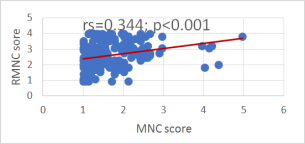
Figure 1. Correlation between missed nursing care and the reason for missed nursing care scores.
3.4. Correlation Between Missed Nursing Care and the Reason for Missed Nursing Care Scores
As shown in
Figure 1 illustrates a positive, highly statistically significant correlation between MNC and RMNC scores, indicating that an increase in MNC score is associated with a corresponding increase in RMNC score (rs = 0.344; p < 0.001).
3.5. Differences Between Missed Nursing Care and Nurses' Personal and Professional Characteristics (n=204)
As shown in
Table 4, higher MNC scores were significantly associated with working 8-hour shifts (Z = 2.484, p = 0.013), perceiving inadequate staffing (Z = 2.241, p = 0.025), dissatisfaction with the current position (Z = 4.188, p < 0.001), dissatisfaction with the nursing profession (Z = 3.838, p < 0.001), and dissatisfaction with teamwork (Z = 3.854, p < 0.001). On the other hand, higher RMNC scores were significantly related to perceptions of inadequate staffing (Z = 3.238, p = 0.001), dissatisfaction with the current position (Z = 3.275, p = 0.001), and dissatisfaction with the nursing profession (Z = 2.593, p = 0.010). No significant differences were found between MNC and RMNC in terms of age, educational level, years of experience, or working area (p > 0.05).
Table 4. The statistical differences between (Missed nursing care practices and contributed factors) and personal data and professional characteristics of the nurses (n=204).
Factor | Significant for MNC | Significant for RMNC | p-value / Test Result |
Shift type | Higher MNC in 8-hour shift | No significant difference | Z = 2.484; p = 0.013 |
Perceived staffing adequacy | Higher MNC with inadequate staffing | Higher RMNC with inadequate staffing | Z = 2.241; p = 0.025 / Z = 3.238; p = 0.001 |
Satisfaction with current position | Higher MNC among dissatisfied nurses | Higher RMNC among dissatisfied nurses | Z = 4.188; p < 0.001 / Z = 3.275; p = 0.001 |
Satisfaction with profession | Higher MNC among dissatisfied nurses | Higher RMNC among dissatisfied nurses | Z = 3.838; p < 0.001 / Z = 2.593; p = 0.010 |
Satisfaction with teamwork | Higher MNC among dissatisfied nurses | No significant difference | Z = 3.854; p < 0.001 |
Age, education, experience, area | No significant difference | No significant difference | p > 0.05 |
Table 4. Significant associations were observed primarily for shift type, staffing adequacy, and satisfaction variables (p < 0.05). No significant differences were found for age, education, years of experience, or working area.
4. Discussion
The current study was guided by Missed Nursing Care Model developed by Cartaxo and colleagues (2024)
| [19] | Cartaxo, A., Mayer, H., Eberl, I., & Bergmann, J. M. (2024). Missing nurses cause missed care: Is that it? Non-trivial configurations of reasons associated with missed care in Austrian hospitals – a qualitative comparative analysis. BMC Nursing, 23, Article 282.
https://doi.org/10.1186/s12912-024-01923-y |
[19]
, which emphasizes that the missed nursing care (MNC) outcome of interacting factors. The findings support this framework, as inadequate staffing, lack of resources, and teamwork were significant contribute to missed nursing care.
According to the results, the overall mean score of the MISSCARE survey was 1.66 out of 5 points (33.2%). Missed nursing care usually associated with intervention and basic needs, planning, and individual needs. These results are similar to that finding, the most significant missed nursing care were failure to attend interdisciplinary care conferences and patient ambulation three times a day
| [7] | Al Muharraq, E. H., Alallah, S. M., Alkhayrat, S. A., & Jahlan, A. G. (2022). An Overview of Missed Nursing Care and Its Predictors in Saudi Arabia: A Cross-Sectional Study. Nursing research and practice, 2022, 4971890.
https://doi.org/10.1155/2022/4971890 |
[7]
. In contrast, Al-Mnaizel, E. et al.
found the mean score for missed nursing care at 2.18 points higher than the study findings, while Hammad, M. et al.
| [13] | Hammad, M., Guirguis, W., & Mosallam, R. (2021). Missed nursing care, non-nursing tasks, staffing adequacy, and job satisfaction among nurses in a teaching hospital in Egypt. The Journal of the Egyptian Public Health Association, 96(1), 22. https://doi.org/10.1186/s42506-021-00083-0 |
[13]
found the mean score for missed nursing care at 2.26 points. These variations could be due to the differences in study settings, sample characteristics, and cultural and organizational factors. Addressing the missed nursing care in hospitals is crucial, which may include improving unit staffing, ensuring the availability of resources and promoting effective communication.
Result from the present study suggests that the 8-hour shift, inadequate unit staffing, dissatisfaction with the current position, job, and level of teamwork were significant predictors of increased MNC. Potential reasons that may lead to missed nursing care due to 8-hour shifts include increased handoff and fragmentation of care, task and time pressure, and cumulative fatigue across multiple shifts. Lack of human resources may lead to an increased risk of missed nursing care due to increased workload per nurse, task prioritization, and burnout that leads to a negative impact on morale. While dissatisfaction with current position, job and level of teamwork is an important reason for missed nursing care due to decreased feelings of motivation, engagement, professional growth and support. In line with the study findings, several international studies have found that inadequate staffing, teamwork issues, and dissatisfaction with the job significantly impact MNC
| [13] | Hammad, M., Guirguis, W., & Mosallam, R. (2021). Missed nursing care, non-nursing tasks, staffing adequacy, and job satisfaction among nurses in a teaching hospital in Egypt. The Journal of the Egyptian Public Health Association, 96(1), 22. https://doi.org/10.1186/s42506-021-00083-0 |
| [15] | Zárate-Grajales, R. A., Benítez-Chavira, L. A., Serván-Mori, E., Hernández-Corral, S., Cadena-Estrada, J. C., & Nigenda, G. (2022). Sociodemographic and work environment correlates of missed nursing care at highly specialized hospitals in Mexico: A cross-sectional study. International journal of nursing studies, 126, 104140. https://doi.org/10.1016/j.ijnurstu.2021.104140 |
| [21] | Taskiran Eskici, G., & Baykal, U. (2022). Frequency, reasons, correlates and predictors of missed nursing care in Turkey: A multi-hospital cross-sectional study. International journal of nursing practice, 28(5), e13050.
https://doi.org/10.1111/ijn.13050 |
| [22] | Kassahun, A., Yimam, S. M., Muanenda, Y. S., Ali, B. M., & Yalew, S. G. (2024). Uncovering the priorities of scientific research on sustainable development goals: A case study in Ethiopia. Sustainable Development.
https://doi.org/10.1002/sd.3020 |
[13, 15, 21, 22]
.
In studies conducted by Khajoei, E and Heng, L. et al.
| [3] | Khajoei, E., Balvardi, M., Eghbali, M., Yousefi, M., & Azizzadeh Forouzi, M. (2025). Missed nursing care and associated factors: A cross-sectional study. BMC Nursing, 24(1), 132. https://doi.org/10.1186/s12912-025-02984-3 |
| [23] | Heng, L. M. T., Rajasegeran, D. D., See, A. M. T., Kannusamy, P., Lim, S. H., Aloweni, F. B. A., & Ang, S. Y. (2023). Nurse-reported missed care and its association with staff demographics and the work environment. American Journal of Nursing, 123(9), 28–36.
https://doi.org/10.1097/01.NAJ.0000978144.33445.5b |
[3, 23]
highlighted that, multiple factors including gender, age, education level, work experience, working shift, and intention to leave were associated with MNC. In contrast to the findings of the present study, personal data and professional characteristics variables, including age, education, years of experience, and working area, did not show a significant association with missed nursing care. These variations in study findings regarding factors leading to missed nursing care are due to several reasons, including differences in research methods, sample characteristics, and differences in work environments.
The overall mean score of RMNC was 2.59 out of 4 points (64.8%), indicating a greater impact of RMNC among the population. Among the elements of RMNC, labour resources achieved the highest score, followed by material resources and communication, while institutional management or leadership styles had the least impact among RMNC elements. The current study's result aligns with the study conducted by Khajoei, E. et al.
| [3] | Khajoei, E., Balvardi, M., Eghbali, M., Yousefi, M., & Azizzadeh Forouzi, M. (2025). Missed nursing care and associated factors: A cross-sectional study. BMC Nursing, 24(1), 132. https://doi.org/10.1186/s12912-025-02984-3 |
[3]
which found that, the reasons for commonly missed nursing care were labor resources, teamwork, material resources, and communication. While, Lima, M. et al.
| [24] | Lima, M. B., Moura, E. C. C., Peres, A. M., & Nascimento, L. R. D. S. (2022). The nursing team’s perspective on missed nursing care: An analysis of the reasons. Revista de Enfermagem Referência, (1). https://doi.org/10.12707/RV21057 |
[24]
found that material and labour resources domains were the most prominent reasons for missed nursing care. In the same respect, Mandal, L and Mainz, H. et al.
| [11] | Mandal, L., & Seethalakshmi, A. (2023). Experience of missed nursing care: A mixed method study. Worldviews on evidence-based nursing, 20(3), 212–219.
https://doi.org/10.1111/wvn.12653 |
| [12] | Mainz, H., Buus, A. A. Ø., Laugesen, B., Voldbjerg, S. L., Kusk, K. H., & Grønkjær, M. (2025). Missed nursing care in Danish hospitals: A national survey. Scandinavian Journal of Caring Sciences, 39(2), e70027.
https://doi.org/10.1111/scs.70027 |
[11, 12]
suggested that, the most significant reason for missed nursing care was inadequate staff during disaster time. In light of these results, the study indicates that increasing the human resources in proportion to the workload may reduce the incidence of missed nursing care.
Furthermore, the present study results found that, a positive correlation between MNC and RMNC. which indicates that whenever missed nursing care increases, the reasons for MNC will also likely increase. This correlation exists because the underlying RMNC will directly lead to the inability of nurses to provide comprehensive nursing care. Addressing these causes is crucial to decrease the missed nursing care and improving patient outcomes. In contrast to the study conducted by Hammad, M. et al.
| [13] | Hammad, M., Guirguis, W., & Mosallam, R. (2021). Missed nursing care, non-nursing tasks, staffing adequacy, and job satisfaction among nurses in a teaching hospital in Egypt. The Journal of the Egyptian Public Health Association, 96(1), 22. https://doi.org/10.1186/s42506-021-00083-0 |
[13]
which indicate a negative and weak association between non-nursing care tasks and the elements of satisfaction with incidence of missed nursing care.
However, the present study found that, all personal data and professional characteristics variables, including age, educational level, years of experience, and working area, showed no significant association with RMNC. Inconsistent with study conducted by Haile, K. et al.
| [25] | Haile, K. E., Amsalu, A. A., Kassie, G. A., Asgedom, Y. S., Chema, T. Z., Gebrekidan, A. Y., & Azeze, G. A. (2025). Missed nursing care and associated factors among Ethiopian nurses: A systematic review and meta-analysis. BMC Nursing, 24, Article 1043. HYPERLINK " https://doi.org/10.1186/s12912-025-03697-3" https://doi.org/10.1186/s12912-025-03697-3 |
[25]
which revealed that, level of education, working shift hours, training opportunity, and job satisfaction level have a significant impact on the RMNC. These variations reflect the complexity and multifactorial nature of missed nursing care, as well as differences in research methods and healthcare contexts.





 Share This Article
 Twitter
 Linked In
 Facebook
 Copy
Copy Download